
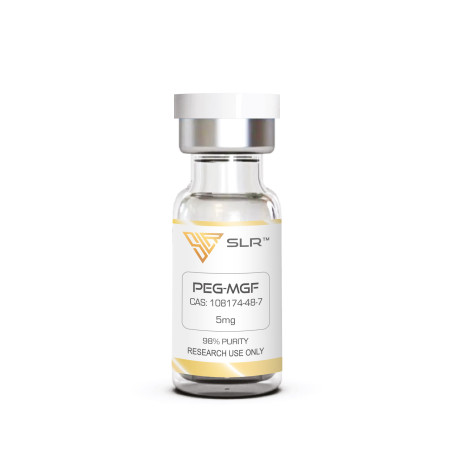
PEG MGF - 5mg
Pegylated Mechano Growth Factor (PEG-MGF) is a modified splice variant related to insulin-like growth factor-1 (IGF-1). In experimental research settings, PEG-MGF has been studied for its role in supporting myoblast division and facilitating the fusion and maturation of muscle fibers. Pegylation enhances the peptide’s stability and circulating half-life, allowing prolonged biological activity compared to non-pegylated MGF. Based on preclinical and experimental studies, PEG-MGF has been investigated in relation to the following biological processes:
Support of muscle tissue remodeling
Stimulation of new muscle cell formation
Neuroprotective mechanisms in experimental models
Cardioprotective pathways associated with cellular survival
Processes involved in wound healing and tissue regeneration
Bone repair and osteogenic activity in injury models
Regulation of body fat metabolism and lipid-related markers
Modulation of immune-related cellular responses
Description
SPECIFICATIONS
Product Code: PMG005
Sequence: PEG-Suc-Tyr-Gln-Pro-Pro-Ser-Thr-Asn-Lys-Asn-Thr-Lys-Ser-Gln-Arg-Arg-Lys-Gly-Ser-Thr-Phe-Glu-Glu-Arg-Lys-Cys
Molecular Formula: C121H200N42O39
Molecular Weight: 2888.16 g/mol
CAS: 108174-48-7
Purity: Technical / Research Grade 98%
Other details: No TFA Salt
Form: Lyophilized powder
Color: White
Storage temperature: -20°C
Source: Synthetic
Safety classification: Standard handling
DESCRIPTION
Insulin-like growth factor 1 (IGF-1) has been modified into a pegylated mechano-growth factor (PEG-MGF). Research indicates that PEG-MGF supports the growth and proliferation of myoblasts (muscle cells).
PEG-MGF, a splice variant of the IGF gene, is utilized in experimental settings to promote tissue development, particularly in muscles. It achieves this by increasing the number of stem cells available for muscle fiber fusion and maturation, a critical process in muscular development. Unlike IGF-1, MGF specifically triggers myoblast division by activating certain receptors.
Originally, the use of MGF was constrained by its rapid degradation in the body. Pegylation, the process of attaching polyethylene glycol (PEG) to the molecule, was introduced to address this limitation. Pegylation forms a protective layer around the MGF, allowing it to circulate through the bloodstream with an extended half-life, thus maintaining its bioactivity and muscle growth-promoting properties.
The pegylation process is commonly used to reduce the body’s immune response to a compound or, in the case of PEG-MGF, to extend the peptide’s duration in the bloodstream by slowing down its renal clearance. This extension of MGF’s half-life is the primary reason for the development of PEG-MGF.
Research suggests that PEG-MGF may also have other benefits, including potential reductions in cholesterol and body fat, and enhancement of immune activity related to wound healing. In mouse models of muscle damage, direct injection of MGF has been shown to protect cells by reducing inflammation and oxidative stress.
Additional studies indicate that MGF modulates muscle inflammation and supports the recruitment of neutrophils and macrophages to injury sites, a response influenced by the increase of IGF-1 variants following exercise-induced muscle injury.
From an endocrinology perspective, MGF activates the insulin-like growth factor 1 receptor similarly to IGF-1. In humans, this receptor’s activation is associated with improved muscle regeneration, increased lean body mass, and enhanced energy balance. Thus, PEG-MGF may exhibit IGF-1–like effects in promoting muscle repair and metabolism.
In animal studies, administration of MGF to exercising mice resulted in a 25% increase in mean muscle fiber size. Researchers noted that PEG-MGF, by extending the peptide’s half-life, allows for a single injection to achieve broader effects rather than requiring multiple localized injections.
Furthermore, bioengineering research indicates that MGF may protect heart muscle cells from programmed cell death due to hypoxia and attract cardiac stem cells to the injury site, potentially aiding in heart attack recovery. Studies in rabbits suggest that PEG-MGF can accelerate bone regeneration by stimulating osteoblast proliferation.
In neurological contexts, elevated levels of MGF in the brain have been associated with reduced age-related neuronal degeneration and improved cognitive performance in aged mice. Additionally, MGF treatment has shown promise in mitigating motor neuron loss and muscle weakness in mouse models of ALS, suggesting a potential role in neuroprotective strategies.
REFERENCES
All information presented above is derived from in vitro experiments, animal studies, and other preclinical research models. These data are intended solely for basic scientific investigation of biological mechanisms and do not imply any therapeutic, diagnostic, preventive, or clinical use in humans or animals.
X. Liu et al., "Impaired Skeletal Muscle Regeneration Induced by Macrophage Depletion Could Be Partly Ameliorated by MGF Injection" [PMC]
Keng-Ting Sun et al., "Overexpression of Mechano-Growth Factor Modulates Inflammatory Cytokine Expression and Macrophage Resolution in Skeletal Muscle Injury" [PMC]
A. Philippou et al., "Expression of IGF-1 isoforms after exercise-induced muscle damage in humans: characterization of the MGF E peptide actions in vitro" [PubMed]
J.L. Janssen et al., "Potency of Full-Length MGF to Induce Maximal Activation of the IGF-I R Is Similar to Recombinant Human IGF-I at High Equimolar Concentrations" [PubMed]
G. Goldspink et al., "Research on mechano growth factor: its potential for optimising physical training as well as misuse in doping" [British Journal of Sports Medicine]
G. Doroudian et al., "Sustained delivery of MGF peptide from microrods attracts stem cells and reduces apoptosis of myocytes" [PubMed]
J.R. Pena et al., "Localized delivery of mechano-growth factor E-domain peptide via polymeric microstructures improves cardiac function following myocardial infarction" [PubMed]
M. Deng et al., "Mechano growth factor E peptide promotes osteoblasts proliferation and bone-defect healing in rabbits" [PubMed]
X. Jing et al., "Mechano-growth factor protects against mechanical overload induced damage and promotes migration of growth plate chondrocytes through RhoA/YAP pathway" [PubMed]
Jing-Tao Chen et al., "Mechano-growth factor regulated cyclic stretch-induced osteogenic differentiation and MMP-1, MMP-2 expression in human periodontal ligament cells by activating the MEK/ERK1/2 pathway" [PubMed]
A. Walker et al., "Hearts and Minds of Mice and Men: Mechano Growth Factor a new tool in the battle against age-related neuron loss?" [BMC]
J. Dluzniewska et al., "A strong neuroprotective effect of the autonomous C-terminal peptide of IGF-1 Ec (MGF) in brain ischemia" [PubMed]
DISCLAIMER
This product is intendend for lab research and development use only. These studies are performed outside of the body. This product is not medicines or drugs and has not been approved by the FDA or EMA to prevent, treat or cure any medical condition, ailment or disease. Bodily introduction of any kind into humans or animals is strictly forbidden by law. This product should only be handled by licensed, qualified professionals.
All product information provided on this website is for informational and educational purposes only.
Data sheet
Customers who bought this product also bought:

IPAMORELIN - 5mg
NAD+ - 1000mg
CARDIOGEN - 50mg
IGF-1 LR3 - 1mg

COLIVELIN - 10ml/100mg - Spray
PROSTAMAX - 50mg
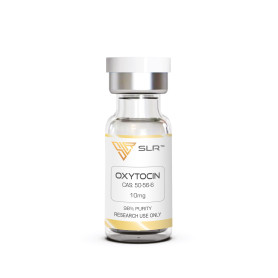
OXYTOCIN - 10mg
| Image | Ref. | Unit price | Weight | Avail. | Buy |
|---|---|---|---|---|---|
 | PMG005 | €68.00 Discount by quantity 10+ €57.80 –15% 20+ €48.96 –28% 50+ €40.80 –40% 100+ €35.36 –48% 200+ €30.60 –55% | 0.000000 kg |  | |
| Total: 0,0 All prices with tax included. | |||||
Product is available Product is no longer in stock
 Product is no in stock, but is allowed to be back-ordered